WARFARE AS TORTURE |
|||||
I’ve been researching and writing for many years on the First World War: an astonishing episode of mass destruction that constituted the starting point and foundation for the politics of the Twentieth Century. This war—lasting from August 1914 to November 1918—produced an estimated 9 million dead with over 37 million casualties. Historians are able to outline in meticulous detail the events that led to this war, but are unable to comprehend why it occurred. For four years, men were asked to get out of trenches and to run toward the opposing line—where they were mowed down (in “No Man’s Land”) by machine-gun fire and artillery shells. Why did this carnage persist? Modris Eksteins observes that belligerents on the Western Front “hammered at each other in battles that cost millions of men their lives but that moved the front line at most a mile or so in either direction.” In short, after four years and hundreds of battles, nothing had been accomplished from a military or political standpoint, apart from the fact that now millions of young men were dead or maimed. Writing about this war, Jean Elshtain notes that we “still have trouble accounting for modern state worship,” the mounds of combatants and noncombatants alike “sacrificed to the conflicts of nation-states.” Ronald Aronson reflects:
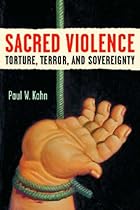
In Sacred Violence, Paul Kahn provides a theory that allows us to account for the devastation produced by the First World War—and other wars. In Nations Have the Right to Kill, I pose the question of how best to conceptualize the killing and dying that occurred in the First World War. If French generals asked their soldiers to get out of trenches and run into German machine-gun fire, should we say that France or Germany was responsible for their deaths? When German generals asked their soldiers to get out of their trenches—to be mowed down by French machine gun fire—should we say that Germany or France caused the death of German soldiers?
Kahn steps back from the sound and fury. Viewing the battlefield from “a certain distance,” he notes that it often is not clear who the object of sacrifice is. Is it the conscript on “our side” or the “enemy” soldier? Each suffers the “same threat and burden of physical destruction.” Abraham Lincoln at Gettysburg (November 1863) spoke of the battlefield as “consecrated ground.” The mangled bodies of both Union and Confederate troops testified to the reality of the truth that Lincoln held to be “self-evident.” Kahn hypothesizes that warfare—the field of battle—functions as a testament or testimonial to the idea of “sovereign power.” The battlefield is strewn with the “disemboweled and beheaded, with severed limbs and broken bodies.” All have died a horrible death in the “display of sovereign power.” A battlefield is the space within which the “sacrificial character of modern politics shows itself.” It is an arena of “reciprocal self-sacrifice” in which “enemies offer each other the occasion for displaying sovereign power.” So the question becomes: What is the nature and meaning of this “sovereign” in whose name such havoc may be wrought? We turn to Kahn’s explication of the relationship between torture, public executions and warfare. Embedded in the practice of the sacred, Kahn says, the battlefield exists in the “same imaginative framework of the scaffold”—a space for bringing forth the “creative-destructive power of the sovereign.” What is the relationship between the battlefield and the scaffold? Tomas Santos describes the scaffold as the place where the power of the King was brought about through “vengeance being wrought over the criminal.” Foucault observes that the public execution should be understood “not only as a judicial but also as a political ritual.” The execution was carried out, Santos says, to show “both the power of the King and the truth of the crime.” Torture was meant for all to see: a grand spectacle to show the power of the King over not just the criminal, but over all those under the King’s rule. Criminals were considered enemies of the State. Torture functioned to defeat the King’s enemies. By making torture a public spectacle, the King or sovereign make it clear that “he and he alone rules the land.” Might warfare—the battlefield—function similarly as a place where bodies are destroyed in order to demonstrate the power of the sovereign? Kahn suggests that the destruction of bodies in modern warfare “moves toward a generalized practice of torture.” Just as the scaffold provides a demonstration of the power of the King, so does the battlefield bear witness to the “awesome power of the sovereign to occupy and destroy the finite body.” We have not so much abandoned the practice of torture, but have “shifted the locus of an act of violent sacrifice.” Battle, like torture, results in the “degradation and humiliation of the human body.” Degradation and humiliation (and death) function to demonstrate the power of the sovereign. The battlefield, Kahn says, is the “modern, democratic equivalent of the spectacle of the scaffold.” The battlefield is another place in which bodies are mangled and destroyed as human beings submit to—sacrifice for—the sovereign. Warfare thus may be understood as a massive, collective form of torture.
|