|
|||||
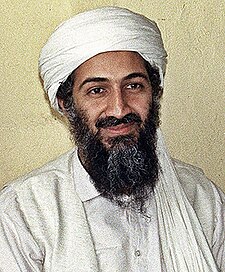
From 1990 to 2000, I presented papers at scholarly conferences on the topics of warfare, genocide and sacrificial death. But there wasn't much of a focus on these issues then. It seemed that we were reaching the "end of history," and that collective forms of violence would become a thing of the past. However, after September 11, suddenly the idea of sacrificial death became worthy of analysis and discussion. It's been an uphill battle persuading people to see the relationship between Islamic martyrdom and the martyrdom that has characterized Western civilization, which we call sacrifice or "dying for one's country." Mohamed Atta’s last letter (found in his luggage) details the acts that the suicide bombers would be required to perform in order to achieve their mission. Stein concludes that this letter “does not speak of hatred.” It is “past hatred;” rather it is about “love, love of God.” Seeking to annihilate the enemies of God, Atta seeks God’s approval for what he is about to do. Although we call the perpetrators “evildoers,” Stein notes that they “did not themselves consider their acts to be evil.” Rather, they deemed their acts to be “appropriate, just, necessary.” Murder was conceived in moral terms. Bin Laden, similarly, conceived of these violent acts as morally justified, indeed morally required or necessary--because they were undertaken to express the will of Allah. In an interview of December 1998 conducted by ABC news, Bin Laden stated that possessing weapons (of mass destruction) was a "religious duty." To acquire these weapons was necessary in order to “counter the infidels.” Bin Laden does not state that he enjoys acts of violence, Rather, killing and fighting are “prescribed” for Muslims—are an “obligation.” It is possible to “dislike a thing that is good for you.” Nonetheless, “God knoweth, and you know not.” In an interview conducted in May 1998, Bin Laden explained that his religion believes that Allah has “created us for the purpose of worshipping him.” Thus, Allah has ordered Muslims to “make holy wars and to fight to see to it that His word is the highest and uppermost and that of the unbelievers the lowermost.” Terroristic violence is undertaken, it would appear, according to the following schemata:
The key concepts are faith, love and willingness to submit to an object conceived as all-powerful. Out of faith in and love for this object, acts of violence are undertaken. Hitler's faith in Germany What Allah was for Bin Laden and the 9/11 suicide bombers, Germany was for Hitler. He declared:
For the Nazis, Germany was the object of worship. Hitler was the perfect “representative” of the nation. Faith in Hitler thus was equivalent to faith in Germany. Rudolf Hess declared, “We know nothing but carrying out Hitler’s orders, and thus we prove our faith in him.” The term “obedience” is commonly used in relation to the behavior of some Germans during the Nazi period. One might similarly say that Muslims are obedient to the will of Allah. In neither case does this term convey the reality of active faith and devotion. Many Germans were faithful to Hitler and devoted to Germany. Muslims are faithful and devoted to Allah. Faith and Submission Here we approach the dialectic of faith and submission. German soldiers declared an oath of personal allegiance, swearing that they would render “absolute obedience to the Fuhrer of the German Reich;” would be prepared to offer their lives “at any time for this oath.” The SS-man famously declared “absolute allegiance unto death. An essay appeared in a 1936 illustrated book by Dr. Otto Dietrich, “The Fuhrer and the German People.” Dietrich stated that nowhere else in the world does one find such a "fanatic love on the part of millions of people," a love that grows from a "deep and great faith," the kind of lasting confidence that "children may have for a very good father." Writing about Islamic terrorists, Ruth Stein discusses their love for the primal father, theorizing that this love contains “masochistic elements of profound submission.” The ideologies of both Islamic terrorism and Nazism, then, rest upon absolute faith in an object or entity conceived as all-powerful. Followers of these ideologies are expected to submit unconditionally to the object that is worshipped. Violence is directed, therefore, toward human beings who do not share the faith; do not acknowledge the obligation to submit to the object or entity that is worshipped. |