|
Ideology, Metaphor and Fantasy
by Richard A. Koenigsberg
|
Abstract: Ideologies exist as cultural and linguistic forms within societies. But culture and language do not explain the existence of the ideology. Ideologies perform psychological functions. An ideology exists as an element or dimension of culture because it allows desires and fantasies to become articulated as social reality.
To read the online version of this paper, please click here. |
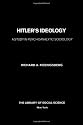
Why did Hitler initiate the Final Solution and take Germany to war? Through analysis of the images and metaphors contained within Hitler's writings and speeches, Koenigsberg reveals the deep structure of Hitler's belief system.
“The best critical analysis in English of Hitler's thought.” —Colin Day
“Koenigsberg's genius has unlocked the secrets of a timeless drama.” —Journal of Psychoanalytic Anthropology
From Hitler’s Ideology:
“How may we account for the shape and form of specific cultural ideas and ideologies? Why are certain ideas ‘passed along,’ and not others? How may we account for the intensity of affect that is attached to certain ideas?
|
|
|
|
I. Ideology and Metaphor
Ideologies contain and articulate psychological meanings. How may one decipher the latent content of ideological texts? My method consists of identifying recurring metaphors, images and figures of speech in the writings and speeches of individuals who have been significant in defining and promulgating an ideology.
An ideology structures and externalizes fantasies shared by a group. An ideology may be compared to the manifest content of a dream—that many people are having at once.
The psychological study of ideology and culture focuses—not on the idiosyncrasies of individuals—but upon how shared desires, fantasies, anxieties and conflicts give rise to collective representations. We seek to reveal the sources and meanings of belief systems that constitute a given societal group.
Within a given ideological system, certain words or terms recur and become salient. In the case of Nazism, the central terms were “Germany”, “the people” and “the Jew”, which together condensed the fantasies upon which Nazi ideology was constructed.
Ideologies exist as cultural and linguistic forms within societies. But culture and language do not explain the existence of the ideology. Ideologies perform psychological functions. An ideology exists as an element or dimension of culture because it allows desires and fantasies to become articulated as social reality.
|
|
II. Conceptual Metaphors
In The Body in the Mind: The Bodily Basis of Meaning, Imagination, and Reason (1990), Mark Johnson writes about “imaginative projection,” a principle whereby the body (i.e., physical experience and its structures) works its way up into the mind (i.e., mental operations). Johnson states that metaphors are not simply “figures of speech.” Rather, they constitute “pervasive, indispensable structures of understanding by means of which we comprehend our world.”
Hitler’s entire worldview grew out of his belief that Germany was an actual body—and Jews pathogenic organisms whose continued presence within the German body politic would threaten to destroy the nation. These images and metaphors occur again and again in his writings and speeches.
Hitler experienced the idea of the Jew in a certain way. This experience generated Hitler’s perception of reality. It is as if this idea or object—“the Jew”—was present within Hitler’s body. The Jew was Hitler’s psychosomatic symptom. The “disease within the body politic” was a disease within Hitler’s own body.
Hitler’s rhetoric demonstrates how a source domain (the human body) becomes mapped onto a target domain (the body politic). Hitler’s metaphors play a cognitive function, revealing the source of his perceptions. Because Hitler projects the idea of a human body (his own) into the body politic, therefore he infers that Germany is suffering from a disease requiring diagnosis and cure.
|
|
III. Fantasy and the Embodied Mind
The psychoanalytic concept of fantasy (or phantasy as it was spelled in the early rendering of this term) refers to an intermediate mental state existing between body and mind. According to Freud, impulses and desires located within the body give rise to mental corollaries, i.e., fantasies, which represent the transformation of the impulse or desire into a form of ideation.
Presenting Melanie Klein’s theory, Thomas Ogden (1993) states that fantasy “never loses its connection to the body.” Fantasy content is always ultimately traceable to thoughts and feelings about the “workings and contents of one’s own body in relationship to the workings and contents of the body of the other.”
If ideologies articulate fantasies and fantasies derive from the body, it follows that ideologies are bound to—not separate from—our bodies. How may we understand the relationship between body, fantasy and mental operations in the case of ideology? Textual metaphors, I suggest, convey the presence of the body—and allow fantasies about the body to enter social reality.
Nazi ideology represented a fantasy about Germany as an organism suffering from a potentially fatal disease. This fantasy about the body was conveyed through the vehicle of images and metaphors that appear endlessly in ideological texts that the Nazis produced. The Nazis created culture and history based on a fantasy about the body projected into their ideology.
|
|
IV. Psychic Determinism
Reality is continually constructed—as metaphors bring the body and its fantasies into the external world. Ideologies are those culturally defined structures that allow fantasies to become part of the “external” world. Ideologies are shared fantasies, transforming desires and anxieties into socially-defined structures of thought.
Analyzing ideologies is analogous to interpreting dreams. As dreams reveal the unconscious fantasies of individuals, so ideologies reveal fantasies shared by members of a group. To analyze an ideology is to interpret a collective dream.
|
|
V. The Human Body and the Body Politic
The reality that the Nazis constructed cannot be separated from bodily fantasy. If ideas about a target domain are derived from experiences in a source domain, it follows that ideas about bodies politic cannot be separated from the experience of our own bodies. Recent social theory has focused on ways that discourse shapes the body. I hypothesize that our bodies—and bodily experience—give rise to and structure discourse.
In the case of nationalism, the experience of one’s body is projected into the idea of a body politic. Often, the line of demarcation between the two blurs. When Rudolf Hess declares, “Hitler is Germany, just as Germany is Hitler,” he implies that there is no separation between Hitler and Germany. Hitler’s small body has fused with the large body. Hitler himself has become a body politic. Two have merged into one.
Hitler’s rhetoric about the German body politic contains a narrative about himself. When Hitler speaks about Germany as a body containing a disease, he is also speaking about his own diseased body. What was the nature of Hitler’s disease—that led him to devise the Final Solution as a means to kill the disease within the body politic?
|
|
|
|
|
|