|
Eric Weitz observes that historians tend to be "averse to the large-scale generalizations to which many social scientists are prone." Historians, rather, favor the detailed study of a particular place and time, seeking to render the "nuance that comes with knowledge of language & culture." At the same time, this deep immersion in the history of a particular people "makes it difficult to move beyond individual cases."
There have been many significant wars fought since 1900. Zbigniew Brzezinski estimated that 87 million human beings were killed in wars through 1993. One may argue that each war had complex causes, which can be ascertained by studying and analyzing each case separately.
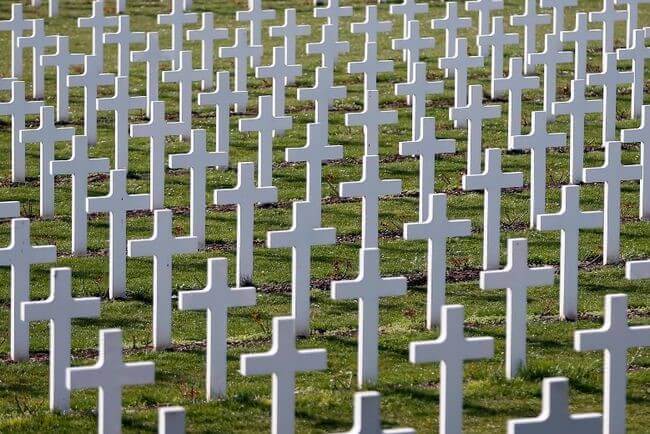
Another hypothesis would be that wars are fought according to a template, which revolves around: (1) Killing. (2) Dying. (3) Memorializing the dead.
Human beings created each war. One may speculate that each war was brought into being to produce killing, dying and memorialization. Perhaps this is a more parsimonious explanation than to assume that each war had a separate, distinct cause.
|
|
“I soon learned to scent out what was able to lead to fundamentals--and to turn aside from everything else, from the multitude of things that clutter up the mind.”
Albert Einstein
“A theory is the more impressive the greater the simplicity of its premises, the more different kinds of things it relates, and the more extended its area of applicability.”
Albert Einstein
|