| Abstract: What does the development of the Internet tell us about the origins of culture and of the symbolic order? Reflecting upon this question, we realize that each and every element of culture was “uploaded” at one point in time or another--by a human being. Reality is a human creation or social construction. A discourse that becomes an element of culture is an idea that resonates with large number of people: that goes viral, and remains viral--spreading and taking hold of human beings within a given society. Certain discourses--due to their appeal--become institutionalized--permanent elements of culture. |
|
Foundational texts on the psychological sources of culture: click photos or links below for information on ordering any ebook at a special discounted prices.
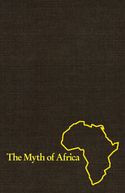 |
The Myth of Africa
Founding text of postcolonial studies envisioning British representations as arising from projections of shared unconscious fantasies.
—Prof. Keith Booker, U. of Arkansas
|
|
|
|
Scholars (and people in general) tend to separate culture from human beings: to imagine or think about culture as if a “thing apart.” The idea of "culture" suggests something that seems “out there” or “up above,” as if descending upon human beings from another domain of reality or realm of being.
Lacan speaks of the “symbolic order.” Foucault uses the term “discourse.” The idea of "narrative" has become popular. What is implied is an order of being above the realm of concrete human existence.
The Internet is perhaps the greatest invention in the history of communication. It makes it possible for every voice to be heard. Any human being can "upload" an idea or piece of writing which then, in effect, becomes an element of culture.
Still, we feel society is “out there” or up above us, imposing its will us. The worlds of politics, or entertainment, or religion or sports seems to descend upon us--from a transcendent (or transcendental) realm.
I do not dispute the power of societal discourse to shape our minds and desires--to determine who we become; who we are.
- I pose, however, another question “Why do Ideologies Exist” (click the link to read my online publication): Why do elements of culture assume specific forms? Why do some discourses become dominant and not others? I seek to ascertain the human source and meaning of cultural ideas and ideals.
Among all the ideas and ideologies put forth by human beings: why are some perpetuated and not others? What do specific elements of culture do for human beings? What is the nature of the gratification that a specific form of culture provides?
I theorize that ideas and ideologies as elements of culture are perpetuated to the extent that they provide specific forms of gratification for human beings. Culture was created by human beings, and exists for human beings, even while it seems as if is something separate from us.
For any cultural form that becomes powerful, we need to identify the sources of the power of this ideology—the nature of the gratification it provides.
Ideologies—and other forms of culture—exist because human beings have created them. They continue to exist because they provide some sort of gratification. We are that. We are the source. Human beings have created that which exists. Who else could it have been?
Take, for example, a cultural form of behavior like Chinese foot binding that lasted for 1,000 years—from the 10th century to 1911. One might call this a custom, or a form of culture. Whatever we call it, there is a tendency to imagine that it came from another realm of being. It was not we human beings who invented and embraced and were responsible for the perpetuation of this form of behavior. A societal discourse shaped the bodies of Chinese women.
We need to pose the question: Why did this form of behavior become established as a significant element of Chinese culture? Why did this form of behavior persist? I assume that this form of behavior was perpetuated because it “did something” for some Chinese human beings—provided some kind of psychic gratification.
We need to pose and attempt to answer this question for any idea, ideology or institution. Why does this form of culture exist? Why does it assume a particular form? What psychological function does the idea or ideology serve for human beings within a given society?
The development of the Internet gives us new insight into the nature of culture. In the past, each human being was subject throughout life to the “downloads” of others. There were school textbooks, Newspapers, radio and television programs, etc. We were, in essence, the "victims" of programs or apps--created by other human beings ("I'm Chevy Chase, and you're not"). Someone up there or out there created the programs or templates—and they flowed into our minds.
When I moved to Manhattan and entered the symbolic, "mass-media" world as a young man, Time Magazine was very popular. It seemed to represent the entirety of social reality: informing us of what was going on in the world, "what's happening now baby.” Time Magazine represented a form of cultural authority and playing a significant role in defining the discourses of the time: how we perceived reality; what reality was.
Before the Internet, only those who were in politics, or who worked for a television station, magazine or newspaper, had a voice. The mass-media constituted the “power structure.” Authority came from afar. I once took a writing class at NYU--where the instructor focused on how to get a letter to the editor published in the New York Times.
Today, everyone has a voice. Anyone in the world can write, publish and “upload” his or her own ideas. One can create one’s own magazine (or Newsletter!) to express and convey one’s views. One doesn’t need to own a television station or a magazine or a Newspaper.
What does the development of the Internet tell us about the nature of culture? Well, if we think about it just a little bit, we realize that each and every element of culture was “uploaded” at one point of another. What seems to be an “objective reality” originated as a human creation. Human beings created each and every element of society.
In the history of any particular society, some uploads went viral. A human being invented an idea, put it out into the world—and many people resonated with it. A discourse that becomes an element of culture is an idea that went viral, and remained viral, spreading and taking hold of people within a given society or population.
Everything that appears “out there”—each and every discourse, each and every element of the symbolic order, was created—uploaded—by another human being. With this insight, we put an end to the age of “mystification.” The king has no clothes.
The wonderful Wizard of Oz is a human being blowing smoke. Each and every discourse or narrative originated with a human being or group of human beings—who conveyed and promoted the idea. For whatever reasons, certain ideas and institutions caught on. They resonated with human beings—were widely embraced and perpetuated—becoming elements of culture.
Why do particular discourses or ideologies become dominant? Why are certain ideas selected out among all the ideas proposed by human beings? Why are certain ideas passed along—becoming elements of culture—and not others? Ideas or ideologies are embraced and perpetuated to the extent that they represent the fulfillment of specific desires, needs or fantasies. Human beings are the source of that which exists.
|