|
For a complete list of Richard Koenigsberg’s essays and papers, please click here. |
Hypocrisy lies at the heart of the institution of warfare. People plug into the spectacle and relish the fantasy of their nation's power and glory. They embrace war as a righteous struggle between good and evil. However, most people themselves do not wish to be put in harm's way. War is enjoyable to the extent that killing, suffering and dying are delegated to someone else. Further, people would rather that the carnage take place somewhere else.
George M. Cohan was awarded the Congressional Gold Medal for his World War I song, Over There. Even now it is difficult to resist this fervent appeal to our idealism and sense of moral responsibility.
Johnnie, get your gun, get your gun, get your gun,
Take it on the run, on the run, on the run,
Hear them calling you and me, ev’ry son of liberty
Hurry right away, no delay, go today
Over there, over there!
Send the word; send the word, over there!
That the Yanks are coming, the Yanks are coming,
And we won’t come back 'til it’s over, Over There! |
Click the image below to watch a clip from the movie Yankee Doodle Dandy
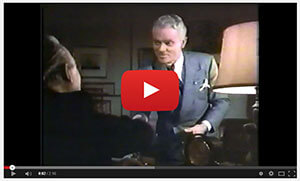 Yankee Doodle Dandy is a 1942 American biographical musical film about George M. Cohan, "The Man Who Owned Broadway". It stars James Cagney, Joan Leslie, Walter Huston, and Richard Whorf. The movie was written by Robert Buckner and Edmund Joseph, and directed by Michael Curtiz. |
|
What actually was occurring "over there?" John Ellis (1989) writes about the sights that stretcher-bearers had to endure as they attempted to recover the bodies lying in "no man’s land." Some soldiers might be found alive, even semi-conscious, with the lower half of their face sliced off or the top of their head and their brains clearly visible.
Men arrived still breathing at the regimental aid posts with holes the size of a football between their shoulder blades. Doctors might gently prise apart the hands of a man clutching his midriff and recoil, sickened, as his intestines spilled out over his trousers. Horrific events such as this occurred a million times over during the First World War.
Insofar as approximately 53,000 Americans were killed and 204,000 wounded in the First World War, we may assume that tens-of-thousands of American soldiers experienced horrors precisely like the ones described above. What astonishing incongruity between the joyful, optimistic song that emboldened men to become soldiers and the nauseating results of battle. How sad to realize that societies play upon the idealism and good will of young men in order to send them "over there," where they may become sacrificial victims.
|