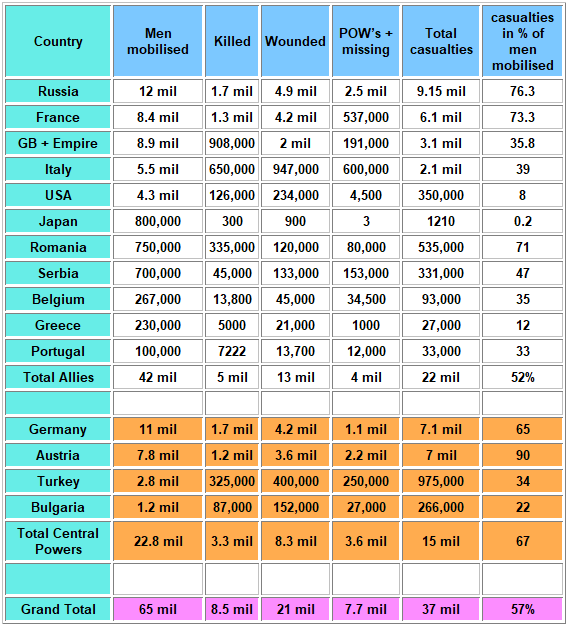
| Franco Fornari hypothesizes (1974) that war represents a “voluntary destruction of previously accumulated reserves of human capital,” an activity performed with the intention to “sacrifice a certain number of lives" (please scroll down the page for data supporting this view!).
Norman O. Brown states (1959) that archaic gift-giving (the potlatch being an example) is “one vast refutation of the notion that the motive of economic life is utilitarian egoism.” Archaic man gives because he wants to lose: “the psychology is self-sacrificial.” The need to produce an economic surplus is connected with the sacred: “Gifts are sacred and the gods exist to receive gifts.”
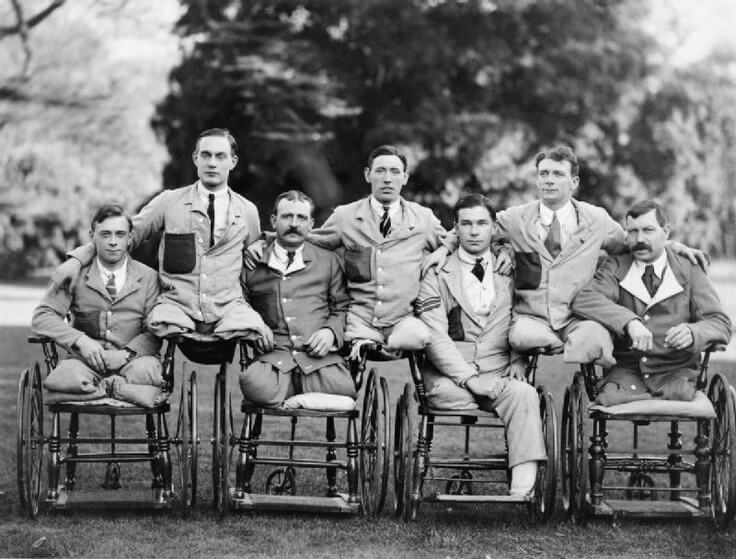
The First World War was a monumental form of potlatch or ostentatious destruction, each nation striving to demonstrate it's willingness to throw away men (and materials).
The greatness or prestige of each nation was measured according to the quantity of men and materials that were thrown away or wasted. The First World War was a massive, sacrificial competition. The “gift” of millions of lives was offered to the reigning god, the nation state.
|