| The nation-state consumes the bodies of soldiers (Paul Kahn) | ||||||
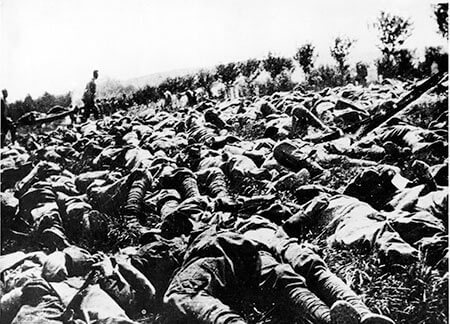
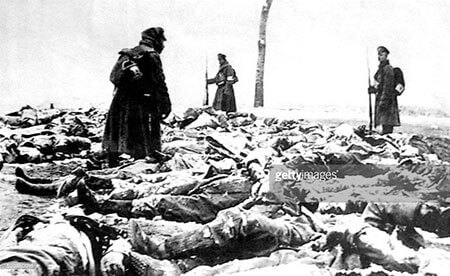
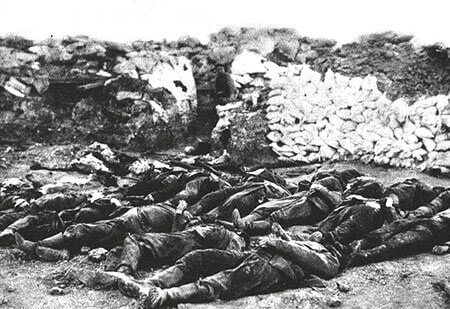
Paul Kahn observes (2008) that at the conclusion of a typical battle (for example, during the First World War), the battlefield is strewn with "disemboweled and beheaded soldiers, with severed limbs and broken bodies”.
It doesn't really matter which side has won the battle and which side has lost: as long as the national-gods were fed with the blood of sacrificial victims. From the gods' point of view, neither side won or lost. The god could not lose in any case.
The gods of the First World War were nation-states such as Great Britain, France, Germany, Italy and Russia (to name just a few of the gods in the name of which the war was fought). “The nation state fed alike from both sides.” It didn't matter which nation had won a particular battle and which nation had lost. As long as there were dead bodies on the battlefield to feed the hungry nation-state. The First World War was fought as a testimonial to the existence of nation-states. Proof of the existence of these god(s). The dead bodies (depicted in the photos to the right) represented a demonstration that nation-states existed. Impossible to conceive that the monumental deaths had occurred in the name of no-thing. Better to imagine that they had died in the name of some-thing. |