In response to my Newsletter, HEGEL AND KOENIGSBERG ON THE KILLING POWER OF THE STATE (scroll to the bottom of the page), ROBERT PROCTOR, author of the monumental Golden Holocaust: Origins of the Cigarette Catastrophe and the Case for Abolition, posed the following questions for me:
1. When is self-sacrifice justified?
2. Is there no cause worth dying for?
3. Aren’t there cases where the State justifiably sacrifices some, for the good of the whole? Should the State not be able to mandate a vaccine that will save a million lives, even if this will predictably cause, say, 20 deaths?
Many thanks for your reflections, Robert
__________________________________________________________________________________________________________________
I responded by asking Robert the following question, which he (or anyone receiving this Newsletter) might take a stab at:
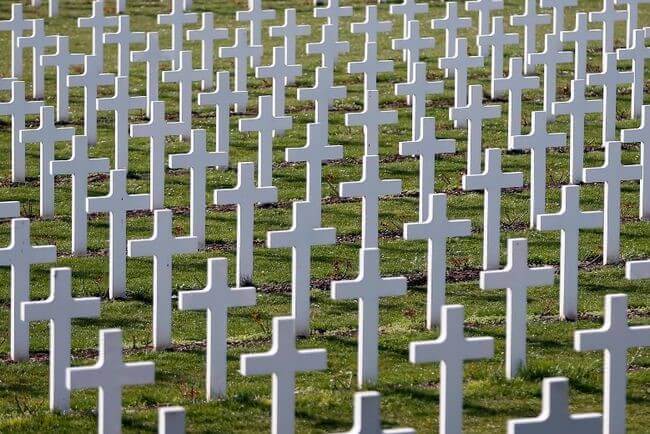
What was the purpose of the nine-million dead and twenty-one million wounded in the First World War?
What was the Cause?
In what sense was this self-sacrifice justified?_____________________________________________________________________________________________
I haven't received a response, but I wish to convey the following reflections:
Jay Winters is perhaps the greatest historian of the First World War. I've watched his magnificent video series (The Great War and the Shaping of the 20th Century, 1996) many times. I suggest you click through to the link...and rest into the video. The series conveys the horror of the First World War--how nations throughout the world got sucked in--seemingly with no way out.
In a tone of humility and baffled bewilderment, Winters sums up a lifetime of research:
-
The war solved no problems. Its effects, both immediate and indirect, were either negative or disastrous. Morally subversive, economically destructive, socially degrading, confused in its course, futile in its result, it is the outstanding example in European history of meaningless conflict.
Based on my own research of 30 years, I think this assessment is accurate: The First World War was useless, self-destructive, and futile--solving no problems. Tragic. Full of sound and fury, signifying nothing.
Of course, no one wants to discuss the First World War, including the great scholars who receive this Newsletter. I’ve been writing about it for years. NO ONE WANTS TO DISCUSS THIS MASSIVE SACRIFICIAL RITUAL IN WHICH THE LEADERS OF NATION-STATES—THE NATION STATES THEMSELVES—SLAUGHTERED THEIR OWN SOLDIERS.
It’s an ambarassment. Everyone wants to preserve the self-esteem of their own culture, Western Civilization. The self-sacrifices of suicide bombers pale in comparison of the sacrifices made by the soldiers of the First World War.
Yet in all these years, no on has said, “You're wrong Richard, and here is where you are wrong.”
Hiding in trenches. Fleeing from the truth. Trying to preserve the self-esteem of Western Civilization.
It’s a great disappointment to me.
Richard Koenigsberg
| Hegel & Koenigsberg on the Killing Power of the State |
|
KOENIGSBERG: I have a bibliography of 1600 items on war and genocide. My focus has been the First World War, the Holocaust, the Second World War--and the Iraq War (2003). Historians study wars as if each has a distinct cause. They labor intensively and produce fascinating books.
However, the "cause" of most wars...is THE NATION ITSELF. This is what nations are meant to do: to kill and make certain that many people die.
No one expressed this idea better than Hegel. I have produced several quotations below. According to Hegel's theory of history--the purpose of the state is the subordination of the individual; to create the state as "the absolute power on earth."
Every war may be different in its particularities, but on the other hand each and ever war is the same. War exists to enact the will of the state. The "great man" is one who articulates the will of the state, that is, who brings about war in order that people might kill and die--enacting the power of the state.
I didn't read Hegel when I was in college. They threw him at we poor freshmen. His writing was too difficult and obscure. As it turns out, however, his idea is similar to the one I document in Nations have the Right to Kill.
"The Nation State is spirit in its actuality is therefore the absolute power on earth. The State is the Spirit of the People itself. The actual State is animated by this spirit. Against this Will, other national minds have no rights: that Nation dominates the World." From G.W.F. Hegel, Philosophy of Law, 331.
All the worth which the human being possesses - all spiritual reality, he possesses only through the State. For Truth is the Unity of the universal and subjective Will; and The Universal is to be found in the State, in its laws, its universal and rational arrangements. The State is the Divine Idea as it exists on earth.
PRIMACY OF THE STATE VS. THE INDIVIDUAL: "In civilized nations, true bravery consists in the readiness to give oneself wholly to the service of the State so that the individual counts but as one among many. Not personal valor alone is significant; the important aspect lies in self-subordination to the universal cause." From G.W.F. Hegel, Philosophy of Law in Jacob Loewenberg (ed.), Hegel: Selections (New York: C. Scribner's Sons, 1929), p. 465.
"The origin of a State involves imperious lordship on the one hand, instinctive submission on the other. Obedience - Lordly power, and the fear inspired by a ruler - in itself implies some degree of voluntary connection. It is not the isolated will of individuals that prevails; individual pretensions are relinquished, and the general will is the essential bond of political union." From G.W.F. Hegel, Philosophy of History in Jacob Loewenberg (ed.), Hegel: Selections (New York: C. Scribner's Sons, 1929), p. 398.
THE HISTORICAL IMPORTANCE OF GREAT MEN: "In public opinion all is false and true, but to discover the truth in it is the business of the great man. The great man of his time is he who expresses the will and the meaning of that time, and then brings it to completion; he acts according to the inner spirit and essence of his time, which he realizes. From G.W.F. Hegel, Philosophy of Law in Jacob Loewenberg (ed.), Hegel: Selections (New York: C. Scribner's Sons, 1929), p. 461.
Koenigsberg's Law of Sacrifice
Wars are fought in order to testify to the power and reality of the state. Death--and memorials erected to honor those who have died—constitute a demonstration of Hegel's idea: the function of the state is to compel human beings to submit and to persuade its citizens to die. |
|
|
|