|
||||||||||||||
|
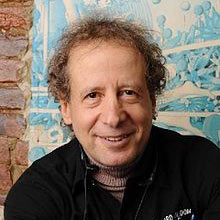
Howard Bloom brings out the best in those he works with: Michael Jackson, Prince---and Richard Koenigsberg. In response to Bloom’s suggestion that violence is a bonding mechanism because killing is exhilarating and addictive, Koenigsberg argued that humankind values war primarily as an opportunity to sacrifice for something greater than oneself.
Mei Ha Chan-Koenigsberg |
||||||||||||||
Richard Koenigsberg participated in a wide-ranging discussion with Howard Bloom and Chad Dougatz on the “Howard Bloom Saves the Universe” podcast. In response to Bloom’s suggestion that violence is a bonding mechanism because killing is exhilarating and addictive, Richard argued that humankind values war primarily as an opportunity to sacrifice for something greater than oneself. The violence of warfare is fundamentally masochistic. There is an object, one’s country, that makes the violence meaningful and moral. Invoking Horace’s phrase, “It is sweet and honorable to die for one’s country,” he suggested that sacrificial ideology is at the “core of Western civilization.” However, Koenigsberg also finds non-Western examples of this ideology, which indicates that the masochistic phenomenon he has identified may be a universal human propensity. After the Vietnam War, the sacrificial mechanism in this country deteriorated. Koenigsberg alluded to a “counter-sacrificial culture of the 1990s:” reluctance to sacrifice. George W. Bush tried to overcome this sensibility--persuading Americans to revisit the sacrificial ideology--by generating the Iraq War. |
||||||||||||||