|
GENOCIDE AS IMMUNOLOGY
Part I: Disease within the Body Politic
My first book was Hitler’s Ideology: A Study in Psychoanalytic Sociology. The sociology part reconstructed Hitler’s ideas about the Jew and how these ideas led to the Holocaust or Final Solution. The psychoanalytic part was an explanation of Hitler’s ideas and their meanings. Why did he embrace them? What did these ideas do, psychologically, for Hitler and the German people?
My objective was to reveal the “hidden narratives” supporting the ideology. How did Hitler’s ideas express and articulate his own desires and fantasies as well as the desires and fantasies of the German people?
Treating Hitler’s ideology as manifest content, I sought to understand its latent meaning. I developed a methodology consisting of identifying recurring words and images in Hitler’s writings and speeches. Hitler revealed his fantasies through his speeches. Using a quantitative methodology, I determined the significance of a given word, image, or metaphor by measuring the number of times this image, word or metaphor recurred in Hitler’s rhetoric.
The empirical data—bedrock of my book—is presented as a list of Thirty-two Tables, each consisting of a number of “Statements” conveying an important theme. I’ll discuss a few of these today:
-
- The Country is a Living Organism.”
- *The Disintegration of the National Body.”
- *The Prevention of Disintegration.”
- *Union as a Defense against Disintegration.”
Hitler’s ideology embodied a coherent fantasy, which was: the German nation is a living organism suffering from a potentially fatal disease, cause of which is the Jew. The images used most frequently to describe Jews were a bacterium, virus, parasite, and force of disintegration.
Unless action were taken against these destructive forces, Germany surely would cease to exist. The Final Solution followed as a result of this idea of Germany as a body suffering from a destructive force, the Jew. Genocide was analogous to a medical operation performed to save the life of a sick patient.
In Mein Kampf (1925)—as well as in countless speeches Hitler gave beginning in 1922 through 1945—I discovered a consistent set of images and metaphors conveying a coherent fantasy.
In place of the state, Hitler said he would create a “living organism, the German people,” a “substance of flesh and blood.” As a result of National Socialism, Germany had become a “body corporate pulsing through and through with a vital inner life.” An early embodiment theorist, Hitler was not content with the idea of Germany as an abstraction or “imagined community.”
Rather, he related to the German nation as if it was an actual body. Hitler’s fantasy of German as a real body politic was the basis of everything that happened. Mein Kampf, Hitler’s struggle, was the struggle of life against death: maintaining the life of the German nation by destroying the Jewish pathogen. Either Jews would live and Germany would die. Or Jews would be exterminated and Germany would live.
The purpose of politics was to maintain the health and life of the body politic which, in Hitler’s mind, was not an easy task—because the body politic was being attacked relentlessly by the Jew, described variously as a “ferment of decomposition in peoples,” a “demon of disintegration,” and as a symbol of the “unceasing destruction of peoples’ lives.” Because of the Jew, Germany was in the midst of a “process of dissolution” that could lead to the “falling to pieces of the organic structure of the nation.”
Words do not adequately convey Hitler’s panic; the overwhelming anxiety he experienced contemplating the impending death of Germany. Many of you have seen documentaries or films of Hitler speaking. The words Hitler spoke—combined with his movements and gestures—taken together convey Hitler’s hysteria and desperation.
Forgive me, I’m going to perform an example of Hitler’s speechmaking. It’s important to try to experience Hitler and internalize him—at least for the duration of my talk.
The following passage conveys the immense power Hitler attributed to the destructive force attacking Germany and the profound threat Hitler imagined it posed:
It is only rarely that the life of peoples suffers from such convulsions that the deepest foundations of the edifice of social order are shaken and that this social order itself is threatened or destroyed. But to-day who will refuse to see or even deny that we find ourselves in the midst of a struggle which is not concerned merely with the problems of frontiers between peoples or States, but rather with the question of the maintenance or annihilation of the whole inherited human order of society and its civilizations? The organization of human society is threatened. This attack is so embracing that it draws
into the field of its action almost all the functions of life, while no one can tell how long
his fight may last.
This was Hitler in his hysterical mode conveying the depth of his anxiety and trying to persuade Germans to share his anxiety—his feeling that Germany was in danger of disappearing from the face
of the earth. He implored Germans to rise up to act: “Either Germany sinks, and we through our despicable cowardice sink with it, or else we dare to enter on the fight against death and devil and rise up against the fate that has been planned for us.”
Mass-rallies were the essence of Nazism. People sometimes turn to Hitler’s Table Talks for understanding. But there is nothing hidden or secret about Hitler: what you see and hear is what you get. Through his speechmaking, Hitler reveals his inner being.
Hitler felt most alive connecting with tens-of-thousands people at these mass rallies, who responded passionately to the words he uttered and gestures that accompanied his words. Germans became ecstatic when he spoke. One may compare Hitler to early Frank Sinatra, early Elvis Presley, the Beatles in 1962, or Queen later. He was a rock star.
The mass rallies fulfilled Hitler’s dream of national unity—bringing the German people together to create an experience of oneness. He was conscious of the impact he sought to achieve:
The individual who at first feels lonely and easily succumbs to the fear of being alone—for the
first time gets the picture of a larger community, which has a strengthening, encouraging effect. Man needs that strengthening which lies at the conviction of being a member and fighter in a
reat comprehensive body. And he obtains an impression of this body for the first time in the mass demonstrations. People came to my speeches as my enemies, but gradually it transpired that after my speech lasting three hours, adherents and adversaries fused into a single enthusiastic mass.
The essence of Nazism is contained within this passage. Hitler sought to fuse the German people into a single body. Individuals surrendered their autonomy and united with the group. But Hitler went deeper, bringing the audience to a climax as they "fused into a single enthusiastic mass."
At another rally Hitler proclaimed to his youth "You are the flesh of our flesh, blood of our blood, and in your brain the same spirit which dominates us is at work. Only tied to us can you exist. You are all one, belonging to me." The rallies reveal Nazism as a massive symbiotic fantasy—uniting participants as if to constituted a single, omnipotent body.
This fantasy of fusion served to ward off Hitler’s other fantasy: that the German nation was falling apart. Unity defended against disintegration. If the German people held together like a single block of steel—welded into a single enthusiastic mass—then the nation would not fall apart. EIN VOLK, EIN REICH, EIN FÜHRER! One people, one Reich, one Fuhrer.
Hitler’s anxiety extended, not only to Germany, but to the “whole inherited human order of society and it’s civilizations.” It was a question of the “maintenance or annihilation of civilization itself.” Hitler aspired to be a savior; rescuing Western civilization.
Put another way: where there were Jews, there was a threat to civilization. So Hitler had to conquer, encompass the entire world—so as to be able to identify and ferret out Jews. Only exterminating every single Jew would assure that Germany and Western civilization would continue to exist.
Hitler’s task as leader was to preserve the German body politic—make certain the nation would not “capitulate before the ferments of disintegration.” To bar the spread of this process, it was essential to establish a “clear separation between the two races.” No salvation was possible until the “bearer of disunion,” the Jew, had been rendered “powerless to harm.”
Hitler’s ideology derived from his fantasy of Germany as an enormous body politic consisting of citizens as “cells.” He aspired to bring millions of German cells together to create a single, omnipotent organism. By “welding men one to another,” Germany would transform into a “single block of steel;” an unbreakable unity that could “resist the force of disintegration.”
If the “will of our people were split into fifty sections,” Hitler said,” Germany would fall apart.” It was necessary to eliminate political organizations working toward “disunion and disintegration.” If Germany put together a “body politic as hard as iron,” then the nation would never again “break in pieces.” To resist fragmentation, Germans had to be thrown into “the great melting pot, the nation” to be “purified and welded one to another.”
So there were two strategies put forward by Hitler to prevent the disintegration or death of Germany:
- To render the Jew, the “bearer of disunion,” powerless to harm. Germany would become “intolerant and pitiless toward anyone who attempted to disintegrate this body politic.”
- To weld the German people so solidly together—as if a single block of steel—so that this body politic would not succumb to the force of disintegration.
Let me turn now to a theoretical issue: Why are certain ideas within a society embraced and come to be accepted as “reality.”
In the good old days, psychoanalysts spoke of the “reality principle.” In today’s world, it’s not clear what “reality” is. Sociologists say that reality is “socially constructed,” but rarely pose questions like: Why is reality created in certain ways? Why does reality assume specific forms? What are the psychological sources of various socially constructed worlds?
These questions—rarely addressed by historians or sociologists—require psychological explanations. Why do certain ideas become “dominant discourses?” What types of gratification do specific discourses provide? What fantasies are articulated though ideologies?
Discourse, a popular term in academia, refers to pre-existing structures or societal templates that impose themselves upon us, shaping our minds and bodies. Lacanians say human beings are “subjects of discourse,” which means we become who we are by virtue of societal ideas that “flow into us” from the outer world.
Some thinkers insist our minds are nothing more or less than the “discourses that push and pull us.” Where else could our minds come from, they argue, if not defined by societal discourses? Lacan declared: “Every reality is founded and defined by a discourse.” These theorists ignore biology and have no concept of a world of bodily experience and fantasy that exists before we become “speaking beings.”
Why are some discourses embraced and not others? Why do people become passionate about certain cultural ideas—to the point of being willing to kill and die for them? ”Why did Germans react passionately when Hitler spoke? Why did the word “Jew” evoke hatred and hysteria—to the extent Germans were willing to brutalize and torture Jews and transport them to camps where they were gassed to death and cremated in ovens. A prisoner arrived at a death camp and asked an SS-man what was going to happen to him. The SS-man pointed to smoke arising from the top of the building: “You will go out the chimney.”
Turning human beings into puffs of smoke. What an extraordinarily radical form of behavior. We’ve grown too accustomed to the Holocaust, forgetting what a weird, freakish event it was. A depth psychological approach is required to unravel the causes and meanings of this event.
Thinking to the beginning of my research, I recall that my primary objective as a young man was to develop a psychoanalytic theory of culture. Nazism would be one case study.
None of my family members experienced the Holocaust—and I barely identified as Jewish. My first published paper—in the American Imago—was on F. Scott Fitzgerald. My second in the Psychoanalytic Review was, “Culture and Unconscious Fantasy: Observations on Courtly Love.” I imagined this as the beginning of a project studying social institutions from a psychoanalytic point of view. I followed up in the Psychoanalytic Review, “Culture and Unconscious Fantasy: Observations on Nazi Germany.” I planned a series of studies using psychoanalysis to reveal the “deep structure” of various cultural forms.
After publishing these three papers, however, I postponed everything to get my PhD. My dissertation supervisor didn’t “believe in” psychoanalysis and it was hopeless to convert him. So I surrendered to being trained as a scientist. My dissertation was, “Experimenter-Subject Interaction in Verbal Conditioning.”
I also completed a tenure on the couch. My psychoanalyst was head of the psychiatry department at Harvard University. In addition to his MD and training at the New York Psychoanalytic Institute—he also happened to have had a PhD in biochemistry. He published a book while I was in analysis, The Biochemistry of Memory. With an Inquiry into the Function of the Brain Mucoids. So I was off to a very good start in the world of psychoanalysis.
Having completed my PhD, I embarked on my project of psychoanalyzing culture. In the Preface to Hitler’s Ideology, I wrote:
The present work constitutes the foundation for a new science: the science of psychoanalytic sociology. The goal of this science is to understand the psychological roots of cultural ideas, beliefs, and values, particularly insofar as these have been embodied in the central ideologies of civilized societies. We hope to achieve this goal through a series of empirical studies, working "from the ground up" in order to establish a base which is solid, and which can be built upon.
I decided to take on Hitler in my first book because everyone at that time was saying the Holocaust was “incomprehensible.” I would reveal why it occurred. My second book, The Psychoanalysis of Racism, Revolution and Nationalism, tackled another mass-murderer, Lenin— based on data from his Collected Works, 50 volumes, that I read at the Columbia University Library.
My aspiration as a psychoanalytic sociologist was to explain ideology. I raised the following questions: How may we account for the shape and form of specific cultural ideas and ideologies? Why do certain ideas become powerful or dominant within given societies? How may we account for the passion associated with certain cultural ideas? Why are some discourses embraced and passed along—and not others?
My overall hypothesis was—and is—that cultural ideas and ideologies take hold to the extent that they embody primal human fantasies and allow us to attempt to master fundamental anxieties and conflicts. Culture performs psychological functions, analogous to a transference neurosis. We externalize fantasies and conflicts into the external world—and attempt to master these through the vehicle of their projective equivalents.
My aspiration to psychoanalyze culture was established, as George Harrison put it, “all those years ago,” So here I am today.
________________________________________________________________________
Please click here for information on viewing the video of this event and/or for information on joining the International Neuropsychoanalysis Society
Richard Koenigsberg, Ph.D.
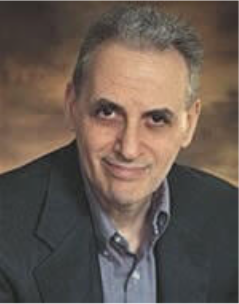
ABSTRACT OF LECTURE: "GENOCIDE AS IMMUNOLOGY."
I present a method for studying the language of political leaders to reveal the unconscious fantasies that generate destructive forms of societal behavior like war and genocide. I focus on Hitler, who conceived Germany as a body politic consisting of the German people as cells of this body. Jews were pathogenic organisms—source of a “disease within the body of the people”. Hitler claimed that Germany possessed an immune system that automatically destroyed alien or not-self cells. Jews were conceived as bacteria, virus and parasites—cells whose continued presence within the German organism would lead to its death.
The Final Solution was as a struggle to destroy Jewish pathogens, thus to save the life of the German nation. I examine the case of Donald Trump, who similarly asserted that the presence of a certain class of people within the body politic would lead to national destruction. Trump identified “Mexican rapists” as the primal danger, requiring construction of a “wall” to prevent these alien cells from entering the body politic.
hy have psychiatrists not developed a concept of collective psychopathology? Over 200 million people died in the 20th century as a result of war and genocide. One would imagine that psychiatrists and psychoanalysts would enter the arena to explore the causes and meanings of collective forms of violence and mass-destruction. There is profound resistance toward exploring pathological behavior that is “normative.” This resistance perhaps stems from our attachment to countries as sacred objects. Political mass-murder is undertaken by nations. We seem unable to face the reality that the most extreme forms of violence are performed in the name of a beloved object. If we wish to “awaken from the nightmare of history”—we need to go where human beings have not gone before by exploring the relationship between violence and love. Why are the most self-destructive forms of human behavior undertaken in the name of mother-countries?
|


