|
||||||||||||||
|
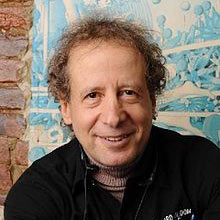
Two of the most original thinkers of our time, Richard Koenigsberg and Howard Bloom, discuss the bizarre, monumentally destructive historical episode that historians call "The First World War." The conversation is moderated by Chad Dougatz in his fabulous HANGAR STUDIOES. For further information (and to see the very table in which the event took place), click the link directly above. |
||||||||||||||
COMMENTARY BY PROFESSOR KIMBERLE BAXTER Richard Koenigsberg participated in a wide-ranging discussion with Howard Bloom and Chad Dougatz on the “Howard Bloom Saves the Universe” podcast. In response to Bloom’s suggestion that violence is a bonding mechanism because killing is exhilarating and addictive, Richard argued that humankind values war primarily as an opportunity to sacrifice for something greater than oneself. There is an object, one’s country, that makes violence meaningful and moral. Koenigsberg reminded listeners that soldiers who were involved in killing during World War usually did not see their victims. Shooting machine guns and artillery shells, they did not have close encounters with the deaths they caused. They were not motivated by visceral enjoyment of perpetrating bloodshed. Invoking Horace’s phrase, “It is sweet and honorable to die for one’s country,” Koenigsberg suggested sacrificial ideology is at the “core of Western civilization.” In warfare, there is always something in the name of which people are dying—something worshipped that justifies killing. For Hitler, it was Germany; for the Aztecs, the Sun God; for martyrs in the Middle East, Allah. Sacrifice is a bonding mechanism validating the entity for which sacrifices are made. Koenigsberg explained the psychological mechanism: If you believe in something enough to sacrifice your life for it, the superordinate object you believe in must be real. After the Vietnam War, the sacrificial mechanism in this country deteriorated. Koenigsberg alluded to a “counter-sacrificial culture of the 1990s.” George W. Bush, Dick Cheney and Donald Rumsfeld tried to overcome this sensibility--persuading Americans to relearn how to die in the Iraq War. Koenigsberg explained how Japan’s 1905 victory in the Russo-Japanese War influenced European military strategists in World War I. They admired the Japanese soldiers’ spiritual willingness to sacrifice their lives. Their willingness to die for the emperor was ingrained. The rallies Hitler conducted to generate a frenzy of nationalistic rage was not necessary in Japan. Westerners have the illusion that we are rational because they no longer die for religion. But we still have an object that we religiously worship (the country) that has not been deconstructed. Ernst Kantorowicz argued that martyrdom for the church transformed into martyrdom for the state. In Hitler’s mind, Jews did not love Germany enough. Hitler became “the greatest sacrificer of all time” because he thought it was necessary to resurrect Germany’s greatness. He viewed Jews the way militant Islamists view Westerners, infidels who had to be destroyed. Dougatz argued that civilization is a “mandate.” But Koenigsberg noted that so-called “civilization” can be the source of horrific carnage, as in World War I. An idea can be psychotic even though an entire society embraces it. Diverting massive resources to projects that seem important but are in fact useless is an ancient practice in Western culture. Bloom asked, what are other ways that people can connect and relate to each other if we transcend sacrifice as a bonding mechanism? The Internet empowers us to create new ways of connecting. People have a psychological need to look to the center as something they strive to connect with. But each of us can create our own center rather than looking to the nation as the center and source of meaning. |
||||||||||||||