|
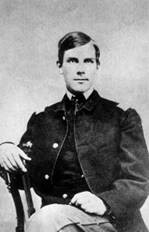
In Oliver Wendell Holmes’ address (see below), he explains that
- the faith is true and adorable which leads a soldier to throw away his life in obedience to a blindly accepted duty, in a cause which he little understands, in a plan of campaign of which he has little notion, under tactics of which he does not see the use.
I write and lecture frequently about "Dying for One's Country," linking the death of the soldier to the sacred ideal for which the soldier sacrifices his life.
Holmes presents a radical view, suggesting that the soldier's purpose is to die, period, dying in obedience to a "cause which he little understands." He describes this willingness to "throw away one's life to a blindly accepted duty as a "faith that is true and adorable."
This view is reminiscent of the poem "The Charge of the Light Brigade" by Alfred, Lord Tennyson, published in 1855:
Theirs not to make reply,
Theirs not to reason why,
Theirs but to do and die.
Into the valley of Death
Rode the six hundred.
What Holmes' address and Tennyson's poem suggest is that the purpose of the soldier is to die. That which the soldier dies for is fungible: he can die for this idea or that idea.
It doesn't really matter. The important point is that the soldier offer his body as a sacrifice. This is his job.
|
From an address delivered on Memorial Day, May 30, 1895, at a meeting called by the graduating class of Harvard University:
"I do not know what is true. I do not know the meaning of the universe. But in the midst of doubt, in the collapse of creeds, there is one thing I do not doubt, that no man who lives in the same world with most of us can doubt, and that is that the faith is true and adorable which leads a soldier to throw away his life in obedience to a blindly accepted duty, in a cause which he little understands, in a plan of campaign of which he has little notion, under tactics of which he does not see the use."
|
|