|
"Reality" as Collective Dreaming
Richard A. Koenigsberg/Mark Johnson
|
|
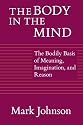
One of the most careful, cogent and thorough expositions of embodied philosophy and cognitive linguistics. Johnson develops a theory of image schemas as the preconceptual links between our embodied experiences and our sophisticated abilities to use language. He offers evidence ranging from gesture, to studies in logic and linguistics, to phenomenology, to aesthetics and art.
Mark Johnson is the Knight Professor of Liberal Arts and Sciences at the University of Oregon.
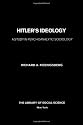
Presents an ingenious technique for identifying the psychological origins of political and social events.” —The Village Voice
“The best critical analysis in English of Hitler's thought.” —Colin Day
“Koenigsberg's genius has unlocked the secrets of a timeless drama.” —Journal of Psychoanalytic Anthropology
|
|
|
I. Ideology and Metaphor
Ideologies contain and articulate psychological meanings. How may we decipher the latent content of ideological texts?
We identify recurring metaphors, images and figures of speech in the writings and speeches of political figures significant in defining and promulgating an ideology.
Ideologies structure and externalize fantasies shared by members of a group. An ideology is akin to manifest content of a dream that many people are having at once. The psychological study of culture focuses—not on idiosyncrasies of individuals—but upon shared desires, fantasies, anxieties and conflicts that give rise to collective representations.
|
|
II. Conceptual Metaphors
In The Body in the Mind: The Bodily Basis of Meaning, Imagination, and Reason (1990), Mark Johnson writes about “imaginative projection,” a principle whereby the body (i.e., physical experience and its structures) works its way up into the mind (i.e., mental operations).
Johnson states that metaphors are not simply “figures of speech,” rather constitute “pervasive, indispensable structures of understanding by means of which we comprehend our world.”
Hitler's ideology grew out of his fantasy that Germany was an actual body, and Jews were pathogenic organisms within the German body whose continued presence would cause the destruction of Germany unless these pathogenic microorganisms were removed. The Final Solution was the desperate enactment of a rescue fantasy. Hitler sought to "save the life" of the German body, with which he equated his own body.
|
|
III. Fantasy and the Embodied Mind
Thomas Ogden states that fantasy “never loses its connection to the body.” Fantasy content is ultimately traceable to thoughts and feelings about the “workings and contents of one’s own body in relationship to the workings and contents of the body of the other.”
If ideologies articulate fantasies and fantasies derive from the body, it follows that ideologies are bound to—not separate from—our bodies. How may we understand the relationship between body, fantasy and mental operations in the case of ideology? Textual metaphors convey the presence of the body—and allow fantasies about the body to enter social reality.
Nazi ideology represented a fantasy about Germany as an organism suffering from a potentially fatal disease. This fantasy was conveyed through the vehicle of images and metaphors appearing endlessly in ideological texts that the Nazis produced. The Nazis history based on a fantasy about the body.
|
|
IV. "Reality" as Collective Dreaming
Reality is endlessly constructed as bodily fantasies are externalized into the world. Ideologies are culturally defined structures whose purpose is to allow shared fantasies to become "reality." Violent political movements such as warfare and genocide enact collective phantasies.
Analysis of ideology is analogous to the interpretation of dreams, revealing the meaning of collective or shared dreams. Man in culture is "man dreaming while awake" (Weston LaBarre).
|
|
|
|
|
|